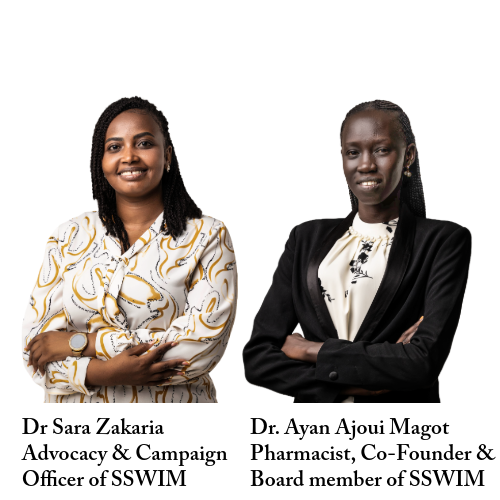
South Sudanese Women in Medicine (SSWIM) is proud to announce that Dr. Ayan Ajuoi Magot has been appointed as the new Executive Director of the organization. Dr. Ayan’s journey reflects resilience, service, and an unwavering commitment to empowering women in healthcare. Throughout her career, she has championed the advancement of women in medicine, pharmacy, and dentistry, advocating for stronger representation and leadership within the health sector. She firmly believes that when women lead, healthcare systems become stronger, more inclusive, and more responsive to the needs of communities.
SSWIM is honored to have Dr. Ayan guide the organization in this new phase of growth, collaboration, and impact. Her leadership will help strengthen the organization’s mission of supporting and connecting South Sudanese women across health professions.
Please join us in congratulating Dr. Ayan as she begins this important chapter of leadership and service. 🎉
💜 The journey continues — and the future is bright.
Dr. Fatima smiling warmly, embodying resilience and hope
This year’s World Humanitarian Day is marked under the theme: “Strengthening global solidarity and empowering local communities.” Around the world, humanitarians continue to risk their lives to reach those most in need. Among them is Dr. Fatima Ali Margan Faragalla Lado, a South Sudanese medical doctor with over seven years of experience in public health, immunization, and emergency response.
Her story is one of courage, conviction, and compassion. Known among her colleagues at Access for Humanity (AFH) as the doctor who steps forward when others hesitate, Dr. Fatima has earned respect for her willingness to go where health workers are most needed, even to hard-to-reach and insecure areas of Koch, Panyijar, Old Fangak, Fashoda, Nasir, and Ulang.
For Dr. Fatima, her journey is rooted in dignity and compassion. The decision to pursue humanitarian health work was deeply personal. Growing up and working in rural South Sudan, she witnessed the devastating toll that limited access to healthcare had on children and mothers. “Access is not just about logistics, it is about dignity,” she explains.
Her conviction was cemented when, while serving in Nasir, she saw preventable diseases like polio leave children with lifelong disabilities simply because vaccines never reached them. Later, while coordinating projects in Fashoda and Ulang, she saw firsthand how fragile health systems deprive mothers of basic services. These experiences became her mission: ensuring that no child in South Sudan should be denied protection against diseases we know how to prevent.
Humanitarian work in practice is not glamorous. For Dr. Fatima, it often means long hours in flooded, insecure, or isolated areas, far from family and modern comforts. She emphasizes that the reward comes in small but profound victories. She recalls travelling with a small medical team to a village in Ulang County that had never seen a health worker. “The first newborn to receive a vaccine that day brought his mother to tears of gratitude. She told us no one had ever offered her family such care,” she narrates.
Moments like these remind her that a committed team, no matter how small, can transform communities and instill trust in health systems.
Dr. Fatuma and team are preparing to send out teams to vaccinate in hard-to-reach flooded villages of Rubkona County.
The risks she faces are real, yet she faces them with courage. While serving in Jonglei, Upper Nile, and Unity States, Dr. Fatima has been caught in crossfire and evacuated on three different occasions from conflict zones. Reaching remote villages in Panyijar or Old Fangak has sometimes required crossing crocodile-infested rivers in small canoes. Yet what sustains her is the solidarity of the very communities she serves. “Often, youth escort us through contested areas so we can reach children safely. Their determination gives me courage,” she says. Her resilience is not just personal. It is fueled by the collective will of communities who refuse to give up on protecting their children, even in the harshest of circumstances.
Dr. Fatima’s professional impact goes beyond frontline delivery. As Project Coordinator and Gender Focal Person at AFH, her impact has been transformative across multiple counties in South Sudan. Through tailored community engagement strategies, she successfully improved immunization coverage by 20% in Koch, Panyijar, and Old Fangak, ensuring more children were reached with life-saving vaccines. In Fashoda County, her leadership and commitment drove coverage rates from 45% to an impressive 88%, achieved by training vaccinators and mobilizing communities to embrace immunization.
Beyond immediate results, she invested in sustainability by training over 200 vaccinators and strengthening county health departments, leaving behind a skilled workforce and stronger systems even in fragile contexts. Central to her approach has been the integration of gender-sensitive strategies, guaranteeing that women and children not only gained equitable access to services but did so in safe and supportive environments that respected their dignity.
Her work reflects this year’s World Humanitarian Day theme: building systems that empower local communities, especially women, to lead healthcare delivery.
On this World Humanitarian Day, Dr. Fatima calls for solidarity and protection of women like her. She reminds the global community, “Solidarity matters more than ever. Please remember the small, remote communities that are hardest to reach but most in need. Support the health workers on the ground with training, supplies, and protection.”
Her story is not only one of service but also a call to action. When medical women like Dr. Fatima step up with courage, the challenges they face must be met with decisive support. Protecting humanitarians, and particularly women on the frontlines, is essential if they are to continue empowering communities and saving lives.
Dr. Fatima inspires us at SSWIM and embodies the essence of humanitarianism: service rooted in empathy, resilience in the face of danger, and solidarity with the most vulnerable. She is a hero who must be protected, not celebrated in words alone, but supported through policies, resources, and protection mechanisms that ensure women like her can continue this life-saving work.
As SSWIM, we spotlight Dr. Fatima not only to honor her courage but also to reaffirm our belief that when women in medicine rise with bravery, the world must rise with them in solidarity.
This World Humanitarian Day, we celebrate Dr. Fatima Ali and all women humanitarians. May their courage inspire us to build stronger systems, empower local communities, and strengthen global solidarity.
Last week, the world marked World Breastfeeding Week under the theme: “Prioritise Breastfeeding: Create Sustainable Support Systems.” While the official week ended on Thursday, the call to action it inspired must echo far beyond a single calendar slot.
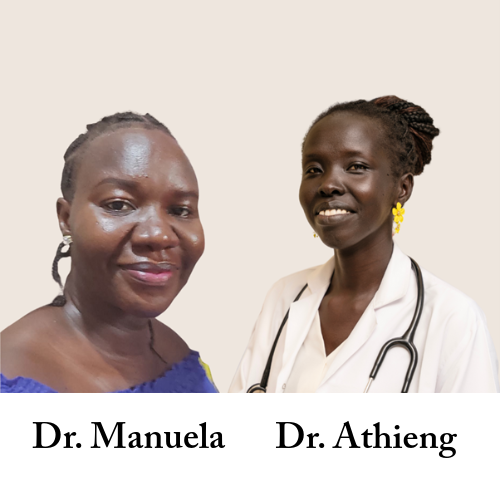
At SSWIM, we not only joined the conversation, but we also added voices that matter. Beyond convening two inspiring female medical doctors and a male medical student for a lively radio talk show at Baraka FMduring the week, we also gathered powerful first-hand testimonies from two South Sudanese female medical doctors, Dr. Manuella Michael Towe and Dr. Athieng Luelbai Abdalatif. Their experiences illuminate why breastfeeding must be supported through deliberate systems, not left to chance.
For Dr. Manuella, breastfeeding was both beautiful and bittersweet. “It’s a great experience, one that is lovely and emotionally rewarding but also overwhelming at times,” she says. Complications after a preterm twin delivery meant she often expressed milk to feed her babies within hours, an adjustment that demanded both resilience and resourcefulness.
Dr. Athieng describes her journey with warmth: “I enjoyed breastfeeding my child. It strengthened our bond and brought joy as I watched my baby grow.” Her reflections underscore the emotional richness that makes breastfeeding more than nutrition. It is connection, comfort, and care intertwined.
While their will to breastfeed was strong, both doctors, like any mother, faced hurdles that shouldn’t be faced alone. For Dr. Manuella, preterm delivery limited the ability to breastfeed directly. Dr. Athieng experienced breast tenderness in the early days with her firstborn, which required medical intervention and persistence.
These challenges are a reminder that breastfeeding success often hinges not on a mother’s determination alone, but on the systems surrounding her from healthcare to workplace to community, and whether they have the conditions to make breastfeeding a success.
Support systems made a clear difference in their experiences. Dr. Athieng credits her husband’s encouragement and her colleagues’ understanding as pivotal. She highlights how policies like lactation and nursing rooms, on-site childcare, and extended maternity leave make it possible for working mothers to continue breastfeeding without compromise.
For Dr. Manuella, who navigated early motherhood outside formal employment, the husband’s, family’s, and community’s support proved essential. Her experience shows why breastfeeding advocacy must extend beyond workplaces to reach mothers in every circumstance.
There are policies that enable, and these are needed to make breastfeeding a priority and a success. From paid maternity leave to accessible breastfeeding facilities, the two doctors highlight policies that are already effective. However, they also emphasize the importance of greater alignment with global recommendations.
Dr. Athieng calls for six months of maternity leave to match the World Health Organization’s (WHO’s) exclusive breastfeeding guidelines. Dr. Manuella advocates for embedding breastfeeding-supportive policies in every institution, from hospitals to government offices, so that no mother faces this journey unsupported.
As female healthcare professionals, both women see themselves as advocates from within the profession. Dr. Manuella educates mothers about both the joys and challenges of breastfeeding, urging them to seek help without shame. Dr. Athieng monitors and advises on breastfeeding practices, ensuring mothers have the knowledge to give their babies the best nutritional start. Their shared message to colleagues is: listen without judgment, collaborate across disciplines, and join forces to influence policies that protect and promote breastfeeding.
The two doctors have messages for the public. From Dr. Manuella: “As beautiful and beneficial as breastfeeding is, it comes with challenges. Mothers need understanding and support, not criticism.” From Dr. Athieng: “Recognise the nutritional and emotional benefits, and create environments where mothers can practice it freely and effectively.”
World Breastfeeding Week may be over, but the work continues. For SSWIM, these stories are not just reflections; they are evidence that sustainable breastfeeding support systems matter and change lives among even society’s seemingly privileged women. Whether it’s through radio dialogues, first-person storytelling, or direct policy advocacy, we remain committed to ensuring that breastfeeding is prioritised in homes, workplaces, and national health strategies.
As our motto reminds us: Empower to Save Lives, when it comes to breastfeeding, empowering mothers is one of the most life-saving acts we can commit to.
At SSWIM, we not only joined the conversation, but we also added voices that matter. Beyond convening two inspiring female medical doctors and a male medical student for a lively radio talk show at Baraka FMduring the week, we also gathered powerful first-hand testimonies from two South Sudanese female medical doctors, Dr. Manuella Michael Towe and Dr. Athieng Luelbai Abdalatif. Their experiences illuminate why breastfeeding must be supported through deliberate systems, not left to chance.
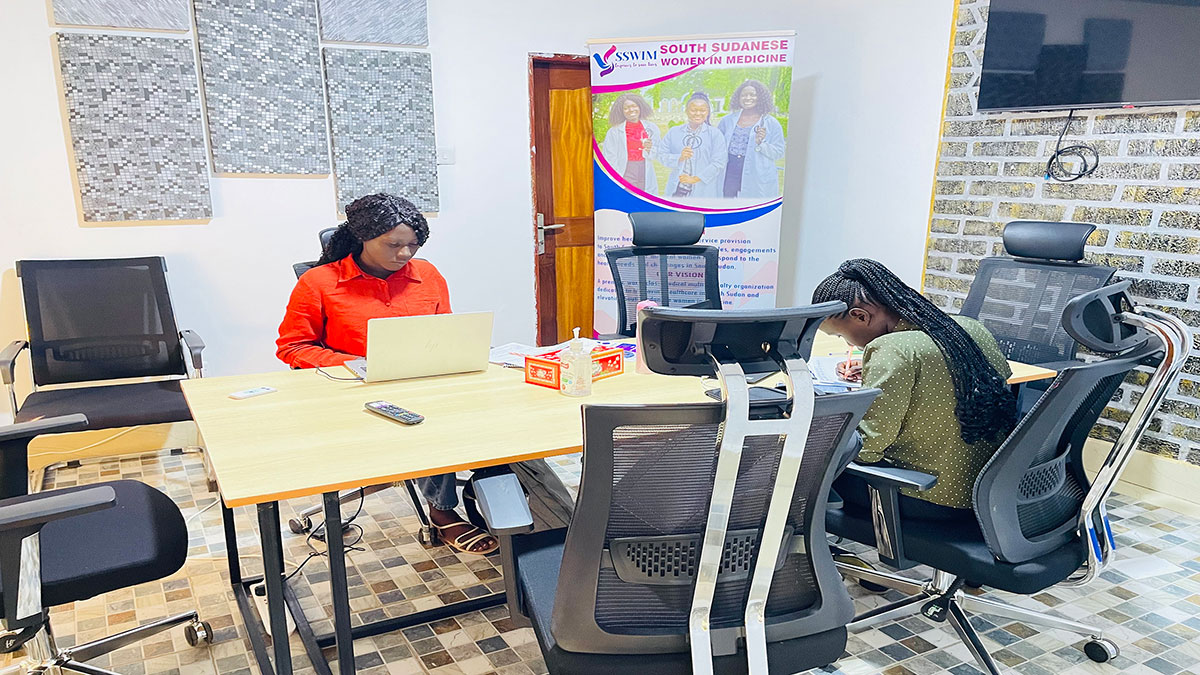
In the demanding world of medicine, women are not just caregivers they are trailblazers, researchers, leaders, and learners. But even the strongest among us need the right environment to flourish. That’s where the SSWIM Career Boost Hub steps in an empowering space tailored specifically to support women in medicine as they rise, lead, and redefine the future of healthcare.
The Hub offers more than just free co-working space, high-speed internet, and printing services. It provides an environment that inspires confidence, productivity, and community. And the impact is already being felt.
For AyaJoseph, a medical student balancing academic demands with her career aspirations, the Hub became more than a workspace.
“Before I found the Career Boost Hub, I struggled to find a quiet, reliable place to study and prepare my assignments and do projects. Now, I can focus without worrying about internet costs or printing fees. It has saved me time, money, and stress and boosted my grades!”
Mary Anger, another dedicated student, shared how the Hub helped her stay consistent and motivated.
“It’s not just the free services, it’s the atmosphere. Being surrounded by other focused people pushes me to work harder. I’ve completed major projects here that I couldn’t have done at home.”
Stories like Aya’s and Mary’s remind us why the Career Boost Hub matters. It’s a bridge to opportunity, a platform for dreams, and a testament to the power of community driven support.
This week, South Sudan has taken a long-awaited step forward in safeguarding the lives of its youngest citizens: the official launch of the Pneumococcal Conjugate Vaccine (PaCV) and Rotavirus Vaccine (Rota) into the national Expanded Programme on Immunization (EPI). This life-saving intervention comes to us through the generous support of GAVI, the Vaccine Alliance, following a co-financing waiver extended to the Government of South Sudan.
The launch is a result of relentless advocacy efforts by public health actors and civil society groups, including South Sudanese Women in Medicine (SSWIM) who have championed the inclusion of these vaccines for several months. And yet, while the week marks a critical milestone, it is also a stark reminder that much work remains.
Despite the gravity of the event, widespread public awareness is still alarmingly low. The average parent remains unaware that their child could, starting this week, be protected against pneumonia, a leading killer of children under five, and rotavirus, a major cause of deadly diarrhoeal disease. These are preventable causes of child mortality, yet they can continue to thrive in settings where access to vaccines is inconsistent or unknown.
SSWIM has been among partners at the forefront of demand creation efforts. From nationwide radio talk shows and an AllAfrica-published opinion editorial to grassroots advocacy meetings and a healthcare professionals' symposium, among others, our aim has been clear: inform, mobilize, and ensure the vaccines' timely rollout. But more effort is direly needed.
Our public health landscape is complex. Just last month, an overstretched healthcare system soaked up a measles follow-up campaign incorporating integrated messaging on PCV and Rota vaccines, even as the country battled and continues to grapple with a cholera outbreak. This comes barely a year after the introduction of the malaria vaccine, which, due to low public awareness, has struggled with uptake. These overlapping campaigns underscore a persistent challenge: community readiness and health system preparedness for new vaccines must be improved.
Another challenge lies in the equity of vaccine distribution. The new vaccines are free. However, private health facilities, often the first point of contact for urban and semi-urban populations, are yet to receive these new vaccines. If left unaddressed, this will create a dangerous gap in access. It is imperative that national and sub-national health authorities engage private facility owners immediately to ensure that their clinics can serve as distribution points under the national program. This is not just about convenience. It is about fairness and the right to health.
As PCV and Rota become routine parts of our EPI schedule, we must seriously consider sustainability. Vaccines must not only be introduced; they must also be consistently available, administered by trained personnel, and accompanied by robust public awareness. This requires more than donor goodwill. It requires unrelenting national commitment, including healthcare financing that secures the future of immunization beyond waiver periods.
We call on our policy elites, development partners, and local leaders to treat this week’s launch not as a finish line, but as the beginning of a renewed journey in protecting our children. Prioritizing immunization in budget allocations, strengthening last-mile delivery systems, and investing in continuous community education must be part of the national agenda.
For the public, the week brings hope, hope that the deaths of children from preventable illnesses will begin to decline. Let us show up at health facilities, ask questions, and have our children vaccinated. For policymakers, it brings responsibility. Let us ensure that no child is left behind, no facility is left out, and no community is uninformed.
South Sudan’s future is in the hands of its children. Let us give them the protection they deserve, starting now.
For more information on where to access the PCV and Rotavirus vaccines, tune in to your local radio or visit the nearest public health facility.