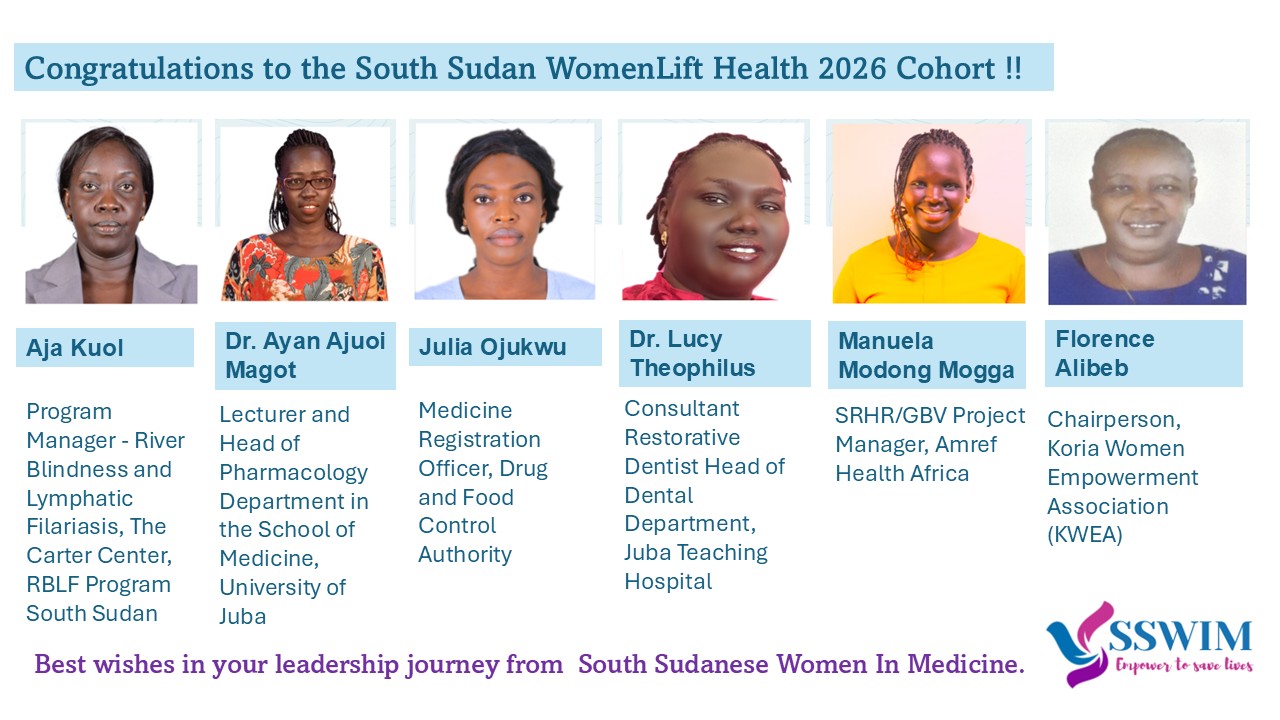
South Sudanese women are continuing to make significant strides in global health leadership through their participation in the WomenLift Health Leadership Journey across East Africa.
The 2026 cohort marks a major milestone, with six South Sudanese women selected—the largest representation from the country to date. This brings the total number of South Sudanese participants across cohorts to approximately twelve, reflecting a growing presence in regional and global health leadership spaces.
This achievement highlights not only the talent and dedication of these women, but also the increasing recognition of South Sudanese professionals in shaping the future of healthcare systems.
A Strong Connection with SSWIM
At South Sudanese Women In Medicine (SSWIM), we are encouraged by the strong connection between this milestone and our community.
Nearly half of the WomenLiftHealth participants across different cohorts have actively engaged in SSWIM activities, contributing to mentorship, professional development, and organizational leadership.
Dr. Buchay Ajack, WomenLiftHealth 2025 Cohort participating in a SSWIM/WiSTEM Event on International Women's Day 2022
Several alumni have also served in SSWIM leadership roles, including on the Executive Council, such as: Dr. Buchay Ajack (2025 Cohort), Dr. Adut Jervase (2025 Cohort), Dr. Lucy Theophilus (2026 Cohort) and Dr. Ayan Ajuoi Magot (2026 Cohort) - our current SSWIM Executive Director.
Their contributions reflect the strength of a growing network committed to advancing women in medicine and global health.
Dr. Adut Jervase, WomenLiftHealth 2025 Cohort participating in a SSWIM Women In Medicine Summit Panel in 2023
Why This Matters
The increasing participation of South Sudanese women in leadership programs signals a broader shift toward more inclusive and representative health systems.
South Sudan faces significant health challenges, including one of the highest maternal mortality rates globally, with many deaths preventable through access to skilled, evidence-based care.
At the same time, women remain underrepresented in leadership roles in health and science. Expanding women’s leadership is not only about representation—it is about strengthening health systems and improving outcomes for communities.